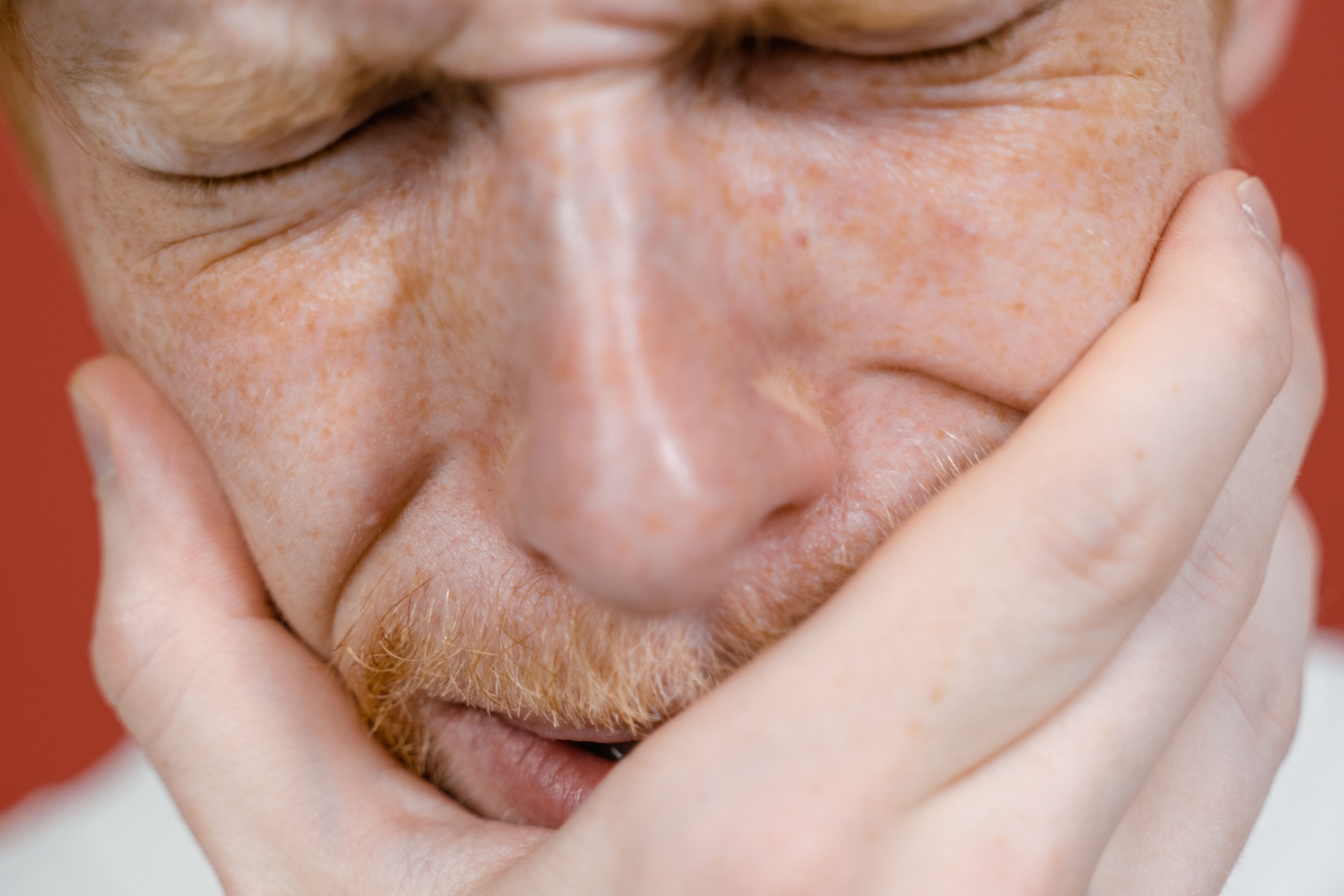
Toothache home remedies can help provide immediate relief while you wait for your next Dentist appointment. However, none of them fixes the underlying problem. A toothache is your tooth telling you something is wrong, and the cause does not go away on its own.
Here is what is safe to try tonight, what to avoid, and the warning signs that mean it is time to call our Bellevue office for a same-day emergency visit.
What Remedies Can I Use at Home to Relieve a Toothache?
The most effective home remedies for a toothache are a saltwater rinse, a cold compress, and an over-the-counter pain reliever taken as directed. Try them in combination:
- Rinse with warm salt water. Dissolve 1/2 teaspoon of salt in a cup of warm water, then swish for 30 seconds. It reduces inflammation and cleans the area.
- Floss gently around the tooth. Many “toothaches” turn out to be a lodged popcorn hull or seed pressing on the gums.
- Take an over-the-counter pain reliever. Ibuprofen or acetaminophen, used exactly as directed on the label, works better than anything you can apply to the tooth.
- Apply a cold compress. Hold it against the outside of your cheek for 15 minutes at a time to numb the area and reduce swelling.
- Try a small amount of clove oil. Dab it on the tooth with a cotton ball. Its natural eugenol has a mild numbing effect.
Which Home Remedies Should I Avoid for a Toothache?
Some popular toothache cures do more harm than good. Skip these:
- Aspirin is placed on the gums. It does not work through contact, and it chemically burns your gum tissue. Swallow pain relievers. Never apply them.
- Heat on a swollen face. Heat can help an infection spread. Use cold instead.
- Whiskey or other alcohol rubs. An old myth. Alcohol irritates tissue and provides no real numbing.
- Undiluted hydrogen peroxide. It can damage soft tissue and must never be swallowed.
- Poking the tooth with anything sharp. You risk turning a small problem into a cracked or infected one.
The most harmful remedy of all is waiting too long. A toothache that fades has not necessarily healed. Sometimes the nerve inside the tooth dies while the infection spreads silently.
Why does tooth pain get worse at night?
Tooth pain tends to be worse at night, mainly because blood flow slows. When you lie down, more blood reaches your head, increasing pressure around the inflamed nerve.
Nighttime also removes distractions, so the pain you barely noticed during a busy day gets your full attention. Teeth grinding and sinus pressure can pile on.
To get through the night: sleep with your head propped on an extra pillow, take a pain reliever before bed as directed, and avoid very hot, cold, or sugary foods in the evening. Then call us in the morning. We keep same-day slots open for patients in pain.
What does my type of tooth pain mean?
The character of the pain offers real clues about the cause:
- Brief sensitivity to cold or sweets often points to worn enamel or a small cavity. A simple filling usually fixes it.
- Constant throbbing or pain that wakes you suggests the pulp inside the tooth is inflamed or infected. That may call for a root canal.
- Sharp pain when biting down can mean a cracked tooth or a filling that sits too high.
- Soreness and bleeding at the gumline points to gum inflammation rather than the tooth itself.
Not sure which side of the line you are on? Our post on the signs you need a root canal vs. a filling explains how we make that call.
Can a toothache go away on its own?
Sometimes the pain fades. That is not the same as healing. If the cause was minor, like irritation from trapped food, relief after flossing may genuinely be the end of it. But when pain from a decayed or infected tooth suddenly stops, the nerve inside the tooth has often died.
The infection is still there, still spreading into the bone around the root. It has just stopped sending pain signals. Patients are often surprised when a tooth that “got better” months ago shows up on an X-ray with a large abscess.
The safe rule: any toothache that lasts more than a day deserves an exam, even if it has gone quiet. A quick visit and X-ray either gives you peace of mind or catches a problem while it is still small and cheap to fix.
When is a toothache a dental emergency?
See a dentist the same day if your toothache is accompanied by swelling in your face or gums, fever, a bad taste that will not go away (a sign of abscess drainage), pain lasting more than a day or two, or pain after an injury. These symptoms indicate an infection or damage that requires prompt treatment. Our guide to what counts as a dental emergency covers each scenario. When in doubt, call us at (425) 641-5303 and describe your symptoms. We will tell you honestly whether it can wait.
How can I prevent the next toothache?
The boring answer is the true one. Brush twice a day with fluoride toothpaste, floss daily, go easy on sugary drinks and snacks between meals, and keep your regular cleanings and exams.
Nearly every toothache we treat started as a small, painless, inexpensive problem that an exam would have caught: a shallow cavity, a worn filling, or early gum inflammation. Routine visits are how a $200 fix stays a $200 fix.
When It Makes Sense to Skip Tootache Home Remedies & Go Straight to a Dentist
During your visit, we examine the tooth, take an X-ray, and explain what we find before doing anything. Treatment may be as simple as a filling. It may involve a root canal, gum therapy, or an extraction with a plan to replace the tooth when it cannot be saved.
You will be numb and comfortable for any procedure, and you will see the options and costs first. That is how we work with every patient at Newport Dental: we explain before we treat.
Get Seen Today at Newport Dental in Factoria, Bellevue
Home remedies buy you time. Treatment ends the pain for good. If you are in the Bellevue area, call Newport Dental in Factoria at (425) 641-5303, book online, or use our contact page. Same-day appointments are available for patients in pain.